
James ###lt###u###gt###Voute###lt###/u###gt###
In May 1939, James was born on a tobacco plantation in Sumatra, Indonesia. No one could have imagined the upheaval to the family by the events of World War 2, separated into different camps, they were all reunited and recovered on Guernsey in the Channel Islands. In 1947 , they all moved to The Netherlands, where James’ father Alex sort to rebuild their shattered lives. After several years, the family secured a house in Amstelveen, a suburb of Amsterdam.
During James’ high school years, he developed his drawing skills using cartoon characters inspired by the new Disney phenomenon which entertained his family and friends. Following his National Service in the Dutch navy as a diver, James lived in France and Germany where he became skilled in languages. Returning to The Netherlands was unsettling so he decided to take the momentous step of emigrating to Australia in 1966, starting his new life in Sydney.
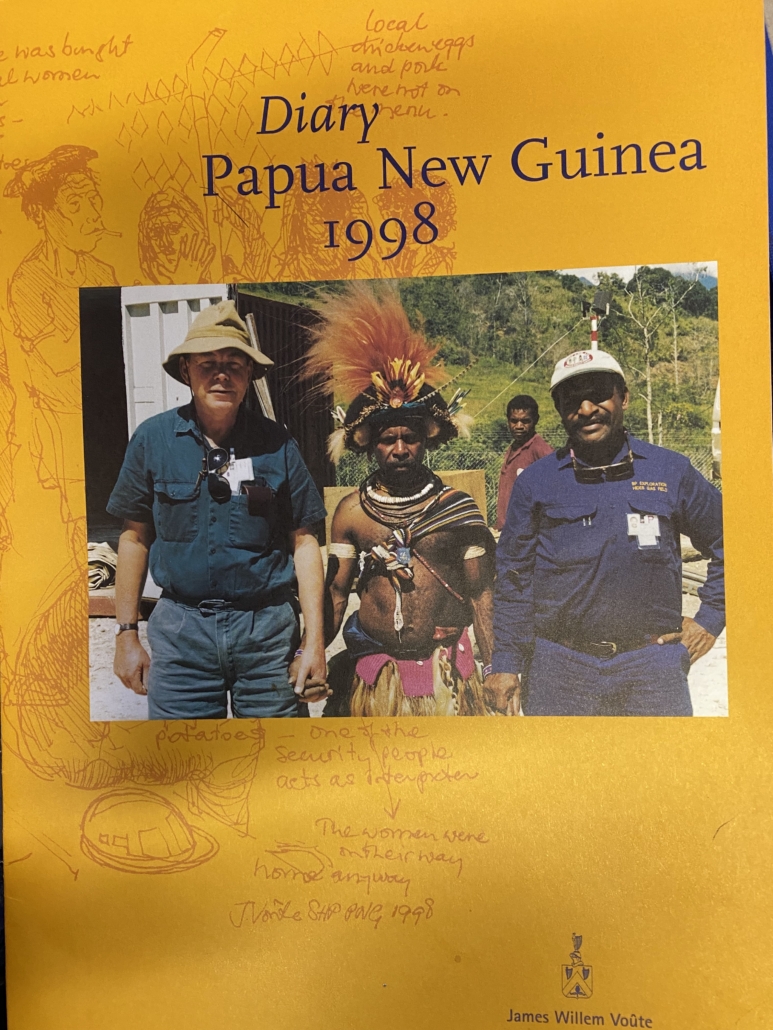
Answering an advertisement for coconut plantation managers in Papua New Guinea, an area of interest as his father had been a successful plantation manager following specialised training in tropical agriculture, James enjoyed several years on remote Papua New Guinea islands. When his contract was completed, James progressed on to become a patrol officer (Kiap) which involved long patrols into the jungles to assist the local people in government processes. He became fluent in pidgin English and began to enjoy drawing as a hobby, winning art prizes in Port Moresby.
After independence in September 1975, James returned to Australia and began working in Arnhem Land and out back Northern Territory. Following the breakup of his marriage, he decided to study art more formally at the Western Australia Institute of Technology (now Curtin University)
1986 saw another momentous decision which was moving to Hobart in order to study at the new art school in Hunter Street as a Masters of Fine Arts student. (University of Tasmania) James was successful in securing a scholarship and needed to tutor drawing as a component of the scholarship.
###lt###u###gt###Influences###lt###/u###gt###
The long periods of isolation in Papua New Guinea and remote outback Australia had a profound effect on James’ imagination, the first peoples of both countries using their storytelling as the verbal history, with the intense colours of the environment influencing James’ art and writing.
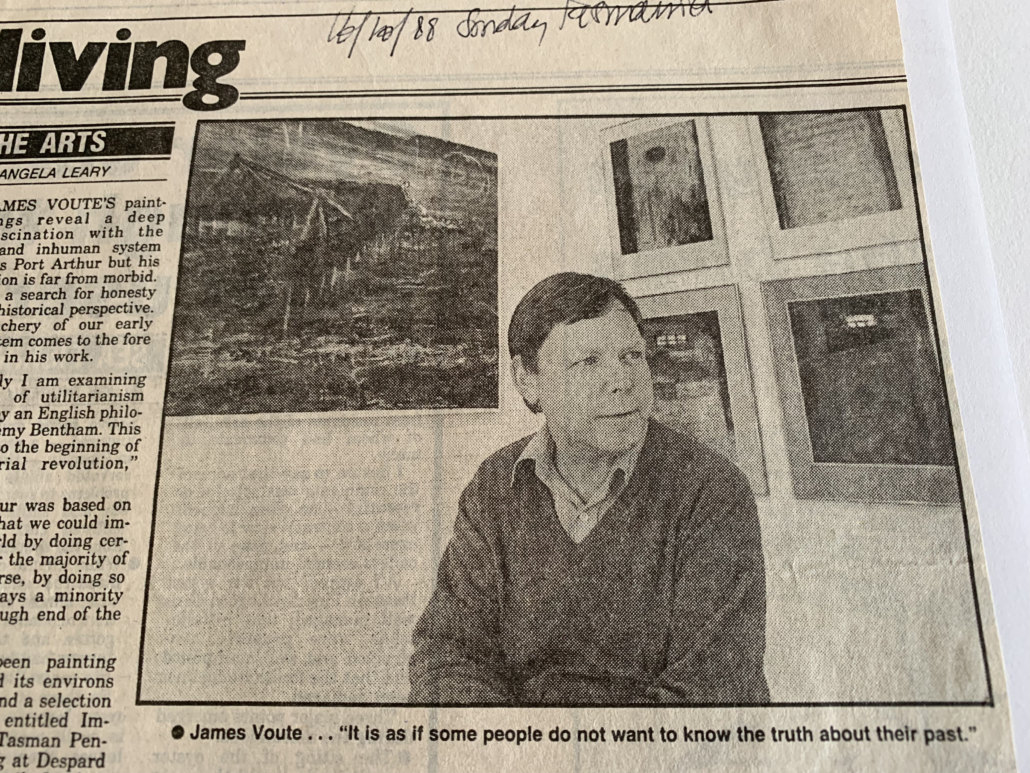
For his Master of Fine Arts James focused on Tasmanian history after a visit to Port Arthur where the ruins of the most notorious penal colony were set in beautiful picturesque settings. The chilling reminders of solitary confinement in the Model prison set off many memories of James’ own experiences with the war. The stark confronting paintings of cells, bars, and stone walls were all presented in the Masters exhibition.
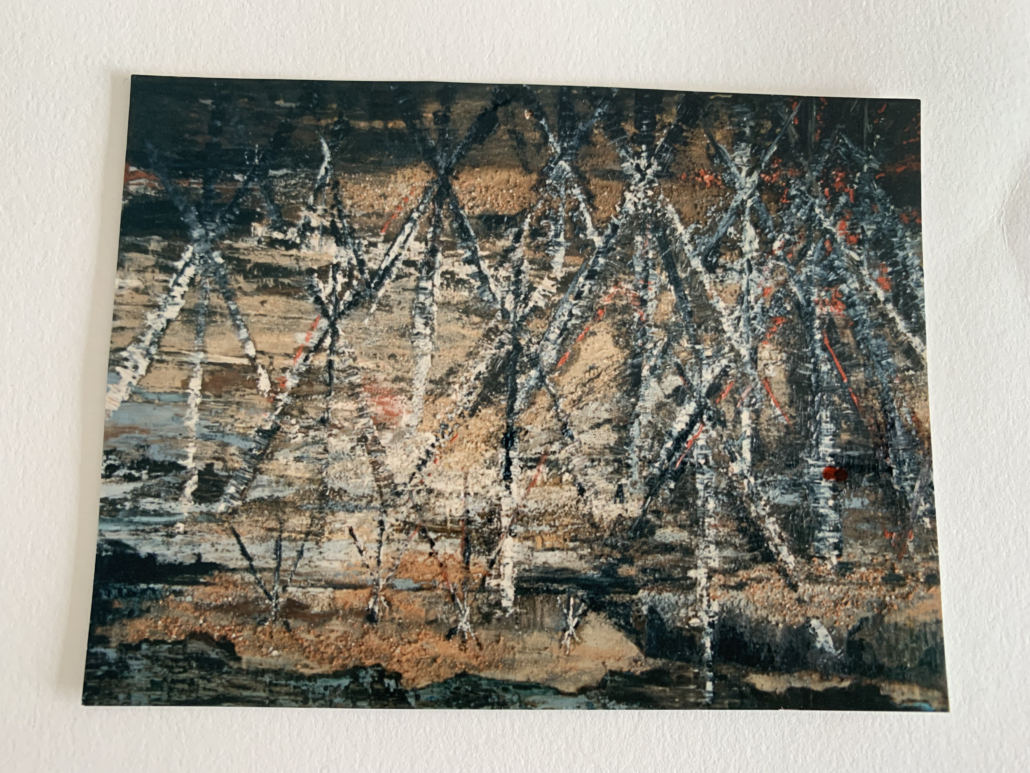
Following completion of his Masters, James secured a position as an art tutor at Risdon prison where his artwork progressed towards more figurative paintings of situations and people. He was influenced by British painters Frank Auerbach, Leon Kossof, and Christopher LeBrun who used heavy impasto creating a lush textured surface on the canvas almost giving a 3D effect.
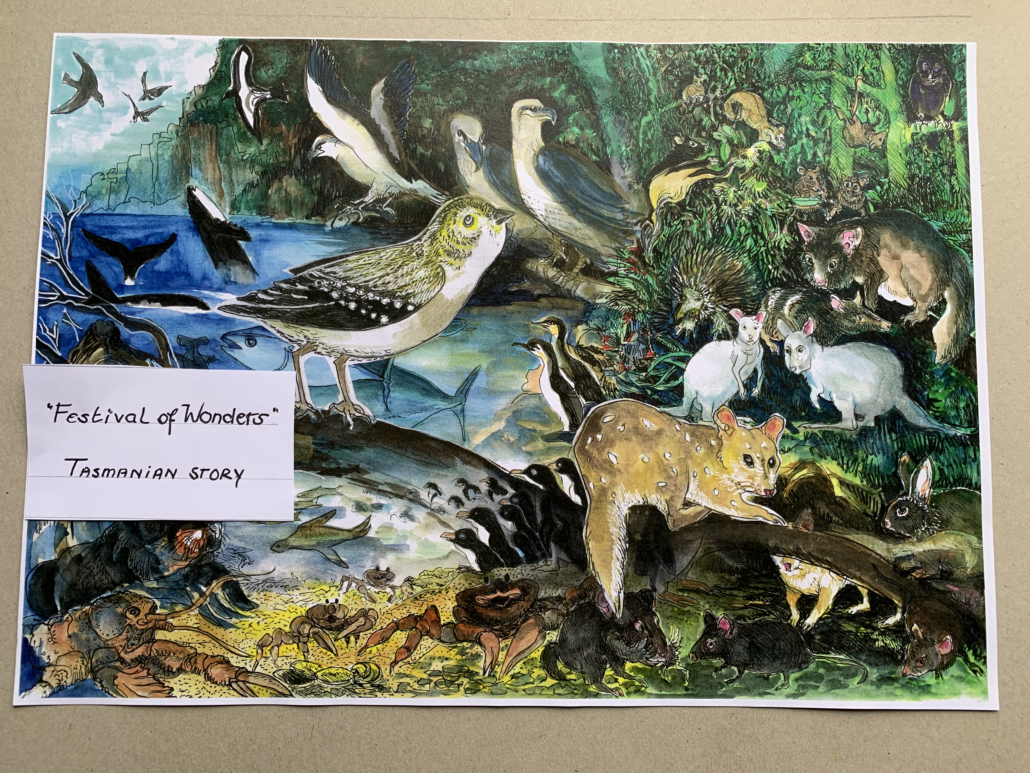
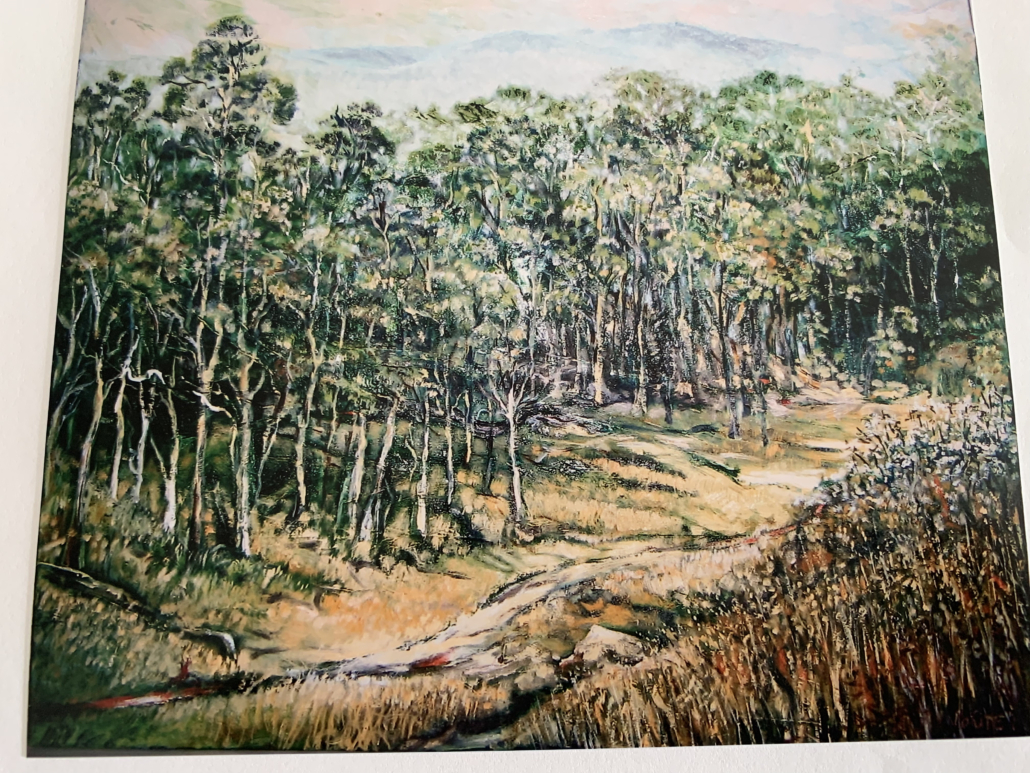
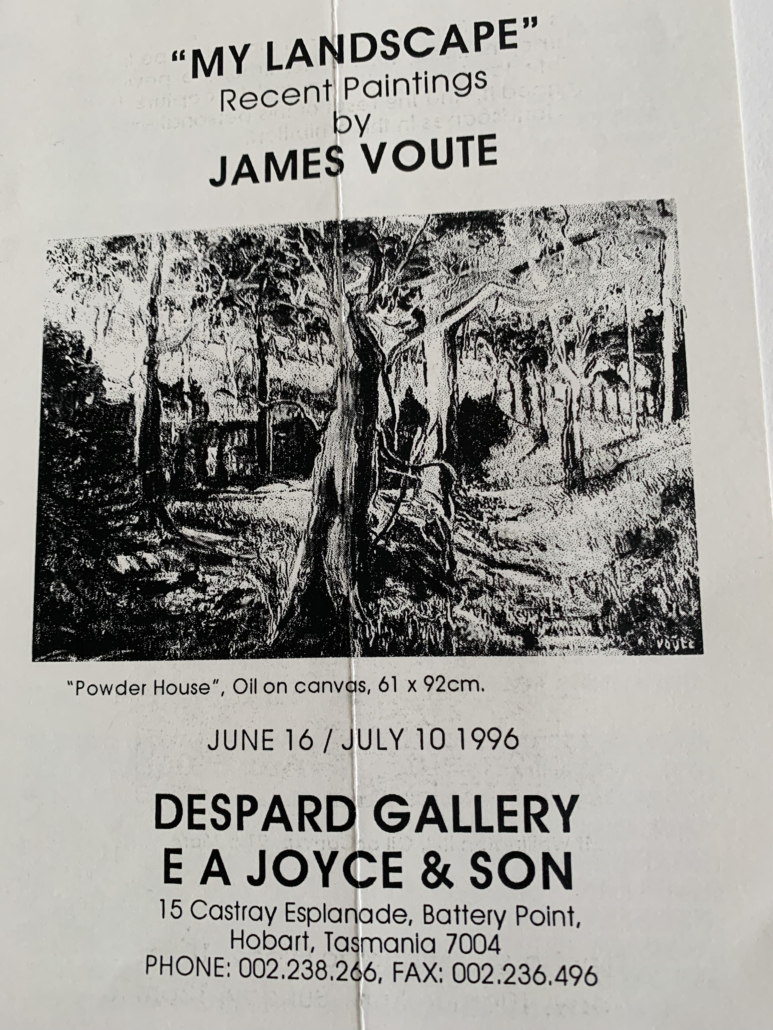
James returned to Papua New Guinea for approximately 18 months in 1999 and on his return began his landscape period, engaging with the stunning views and ever-changing light effects from his studio in Fern Tree, Tasmania. And from those landscapes came the wildlife which frequents the rugged steep foothills of Kunanyi (Mt Wellington. Perfect characters for his current projects of stories and illustrations for children ages 7-12.
In addition to his first book published by Forty South in December 2020 titled “Bennys Quest for the Tasmanian Tiger”, James has 2 further stories in the pipeline based upon the unique wildlife of Tasmania, all illustrated by James.
###lt###u###gt###Workspace###lt###/u###gt###
James home and studio in Fern Tree, Tasmania
Alongside his home at Fern Tree is a small wooden structure loosely described as a studio. The outlook at any time of the day or night is constantly changing with the trees flowing down the undulating slopes, the glint of water, and on clear days, the Tasman Peninsula blue hazed outline tantalizing close.
In the old days of oil paint and varnish, a simple floor was needed but now carpet and a heat pump have been added creating a more comfortable workspace for writing and drawing.
###lt###u###gt###Gallery###lt###/u###gt###
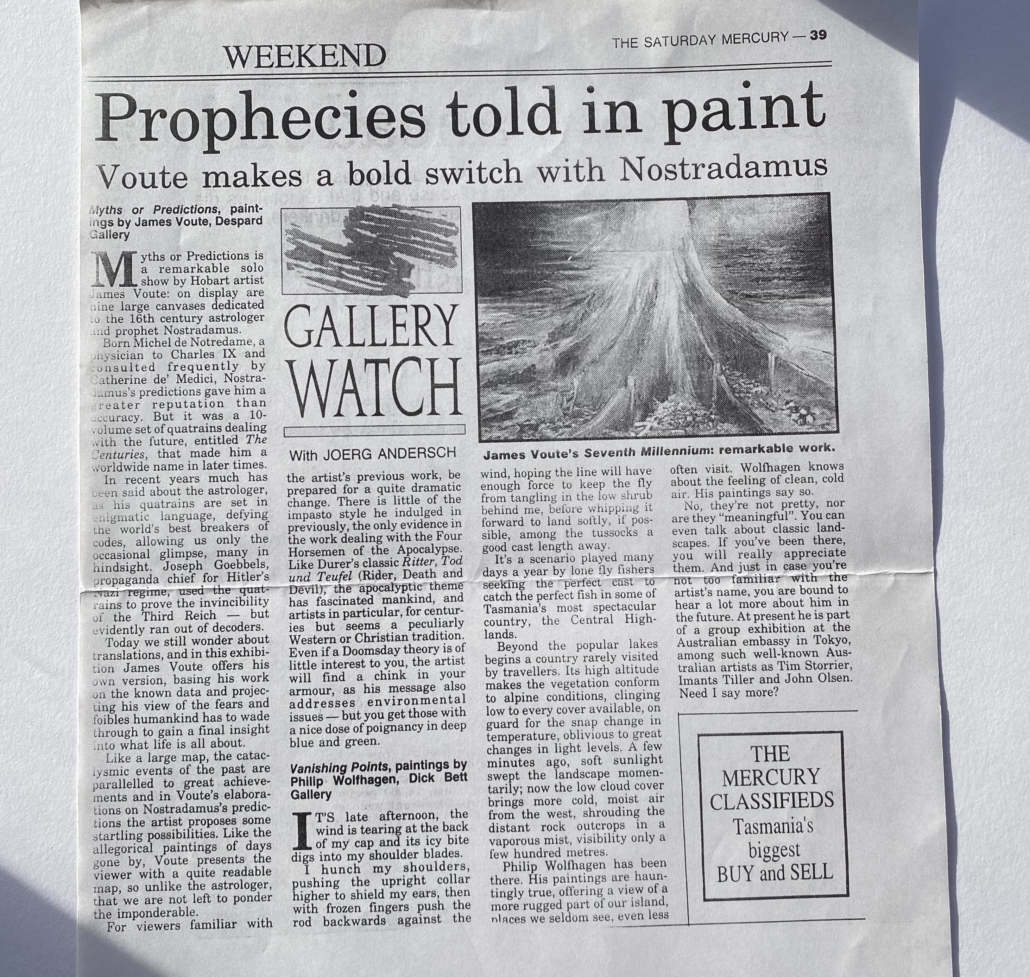
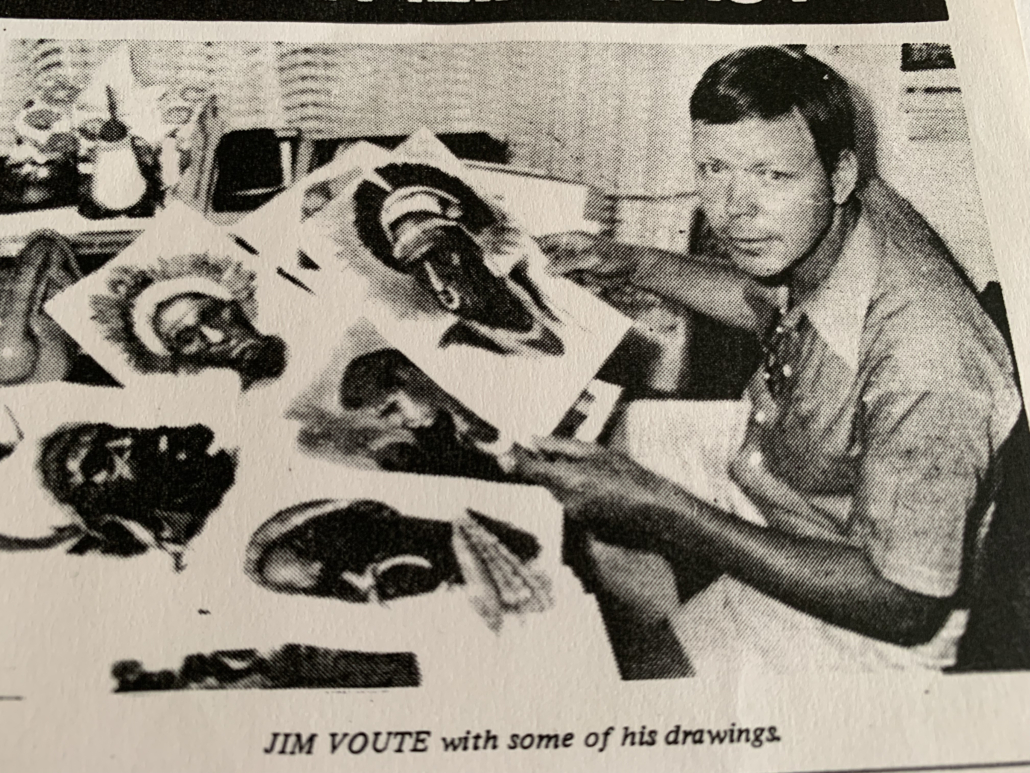
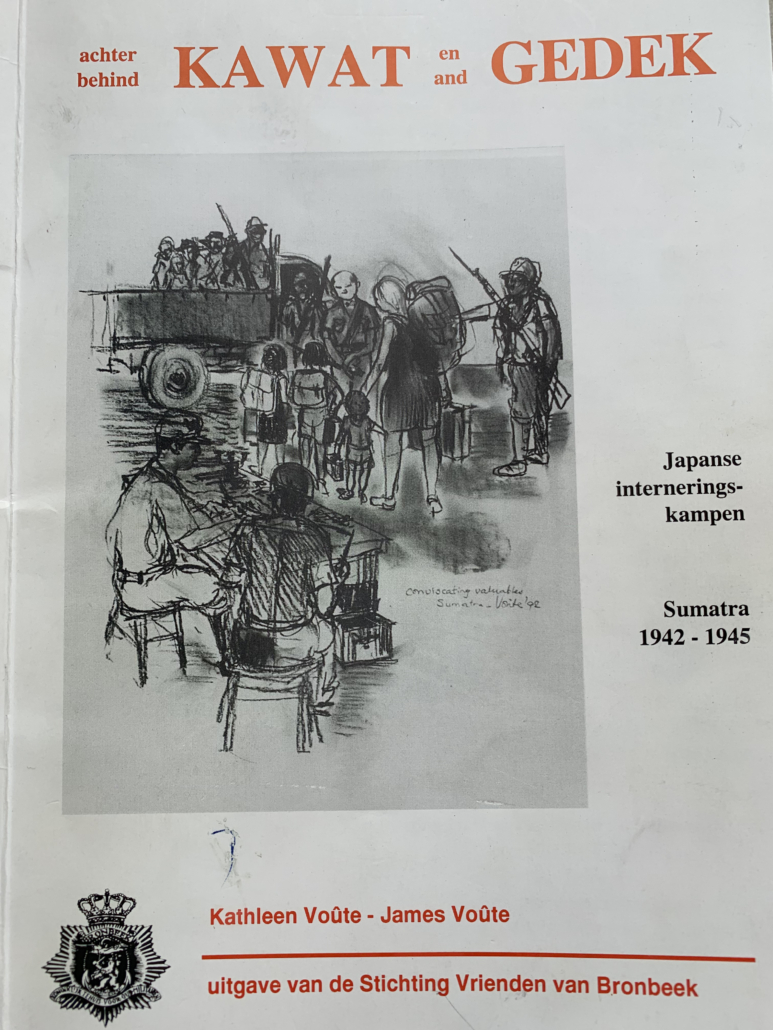
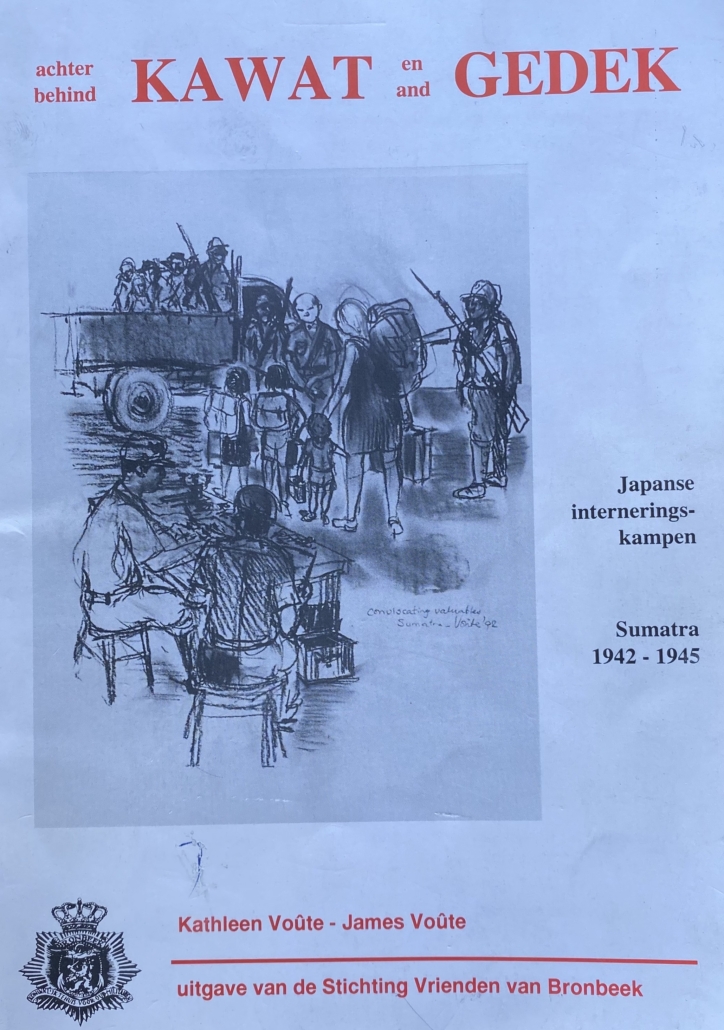
Some photos of James publications, editorial and illustrations
Contact ###lt###u###gt###James###lt###/u###gt###
For General enquiries, please contact James at info@jamesvoute.com.au
Contact Book Publisher, FortySouth Tasmania at contact@fortysouth.com.au